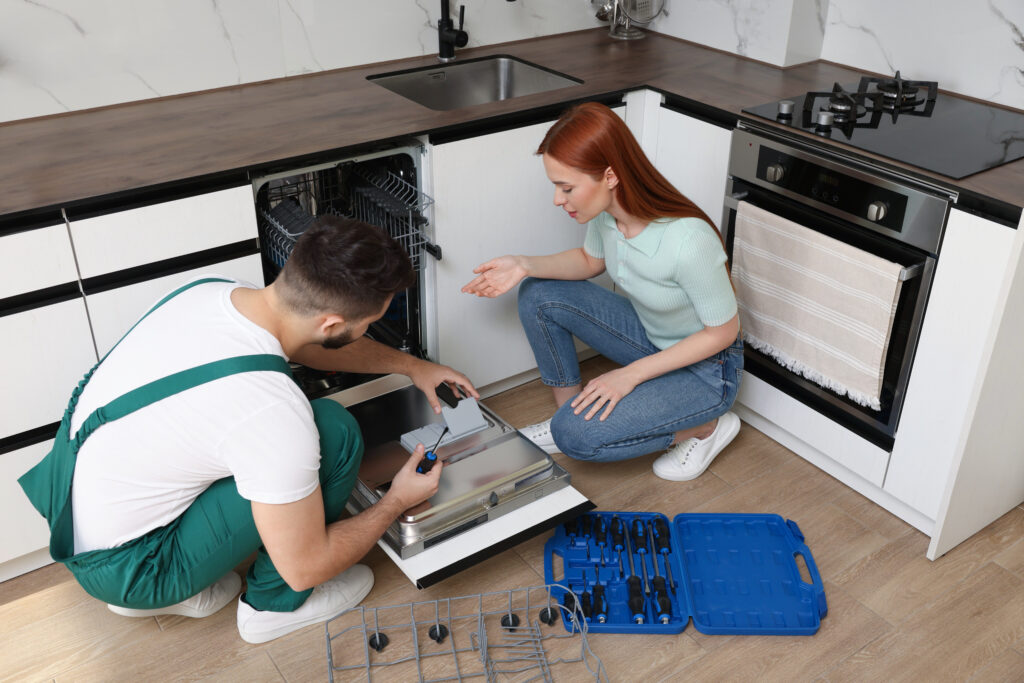

When your beloved appliance breaks down, you never know what you’ll be greeted with, but at Atlas Appliance Repair, one of the most common questions we hear is, “Should I repair it or replace it? The 50/50 rule for appliance repair is the starting point to resolving the question and determining whether or not a repair is financially feasible. This tutorial is designed to inform you on how it works and when to use it.
How the 50/50 Rule Works
The rule of thumb is that if the repair bill exceeds 50% of the cost of a new appliance, replacement is typically the better decision. When the repair is less than 50 percent, it is usually a better investment to repair. For instance, if the refrigerator has to be repaired for $400 and a comparable new fridge costs $1,000, it is worthwhile to repair the refrigerator. If it costs $700 to repair, replacing wins.If it costs $700 to repair, then replacing wins. The appliance repair formula 50/50 is a helpful, reasonable starting point rather than a guess.
Why Appliance Age Matters
The rule is best combined with age. A lot of the time, the age of the appliances and the cost of the repairs are connected, as older appliances are more prone to failure and will only give you a few years of life after a repair on a machine close to the end of its useful life. Refrigerators last 13-17 years, washers last 10-12 years, dryers last 10-13 years, dishwashers last 9-12 years, and ranges last 13-15 years. If the appliance is more than 75 percent of its useful life, consider replacement. If it’s still fairly new, it is almost always worth repairing.
Comparing Repair and Replacement Costs
All appliance repair and replacement decisions are based on numbers. Appliance repair price typically comprises a diagnostics fee, appliance parts and work. Sealed system failures, control boards, and motors can be costly, but a door gasket, heating element, or drain pump can be cheap. Knowing the cost to fix these sorts of appliances can lead you to recognize when a quote is heading towards the 50 percent mark.
Replacement isn’t just about the replacement cost. Replacement cost for appliances may include delivery, installation, haul-away, and new connections. Energy-efficient models can help reduce utility costs in the long run, which can help mitigate part of the initial cost.
Other Factors to Consider
- If the first repair took place in the last year, and you get a second or third break, there are significant issues.
- Parts availability: Discontinued parts can lead to slow or incomplete repair.
- Wasted energy: Older equipment could consume a tremendous amount of energy.
- Safety: If you notice gas leaks, electrical issues, or overheating, it is imperative to seek professional assistance.
- Premium appliances tend to be more durable, and thus more worth fixing than budget models.
When to Replace an Appliance
When it comes to appliances, knowing the time to replace and save money and frustration. When repair costs are greater than half the cost of a new appliance, the appliance is more than 10 years old, has been repaired many times recently, or your energy bills continue to increase, replacement is typically the more practical option. In the absence of any of these, a repair may be more cost-effective and sustainable.

Making the Right Appliance Repair Decision
The 50/50 rule, age, repair history, and efficiency all go together to make a sound appliance repair decision. There are no single factors that explain everything. Our technicians will diagnose the issue, give you an honest answer to repair vs replace appliance questions, and provide you with an honest estimate when you call Atlas Appliance Repair. This is your “fast appliance replacement” guide: get a written estimate, compare the price with a new model, factor in age and then make an informed decision.
Frequently Asked Questions
1. What is the 50/50 rule for appliance repair?
A rule of thumb is to consider replacing an appliance if the repair bill is more than half of the cost of a brand-new appliance of the same model.
2. Does the 50/50 rule apply to all appliances?
It is suitable for large appliances such as refrigerators, washers, dryers, dishwashers and ovens. It’s often the case that it’s cheaper to replace a small, low-cost item.
3. How old is too old to repair an appliance?
The life expectancy of most large household items is 10-15 years. In addition, even moderate repairs might not be worth it.
4. Should I get a second opinion before replacing?
Yes. A professional diagnosis will determine the actual issue and expense, and eliminate the need to replace a unit that only requires a minor repair.
5. Can repairs improve energy efficiency?
Often, yes. If the part, such as the thermostat or seal, is failing, it will be able to restore efficiency by replacing the working part, but very old units may still be more energy-intensive than new units.
Not sure whether to fix or replace? Contact Atlas Appliance Repair today for a fast, honest assessment.